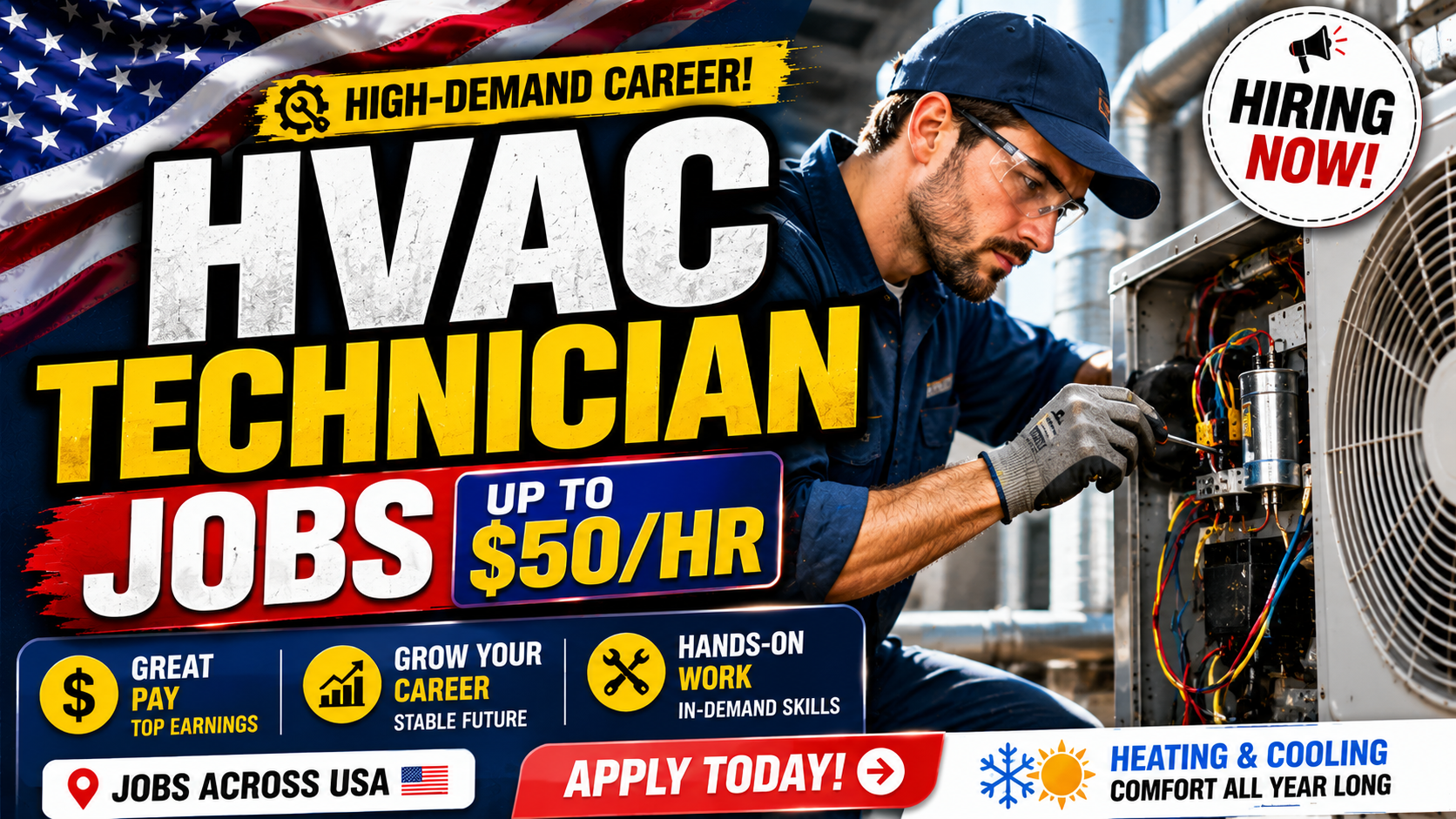
If you’re looking for a stable and rewarding career, becoming an HVAC technician is an excellent choice. HVAC stands for Heating, Ventilation, and Air Conditioning, and technicians in this field install, maintain, repair, and troubleshoot residential, commercial, and industrial climate control systems.
As homes, offices, hospitals, and factories continue to rely on heating and cooling systems, the demand for skilled HVAC technicians continues to grow worldwide.
What Does an HVAC Technician Do?
An HVAC technician is responsible for ensuring heating and cooling systems operate safely and efficiently. Their daily responsibilities include:
- Installing HVAC equipment
- Inspecting heating and cooling systems
- Diagnosing mechanical and electrical problems
- Repairing air conditioners, furnaces, and heat pumps
- Replacing worn or damaged components
- Performing preventive maintenance
- Testing system performance
- Following safety regulations and building codes
- Providing customer service and technical advice
Technicians often work in homes, office buildings, schools, hospitals, factories, and construction sites.
Required Skills
Successful HVAC technicians possess both technical and interpersonal skills.
Technical Skills
- Electrical troubleshooting
- Refrigeration systems knowledge
- Blueprint reading
- HVAC installation
- Airflow balancing
- Welding and brazing
- Preventive maintenance
- System diagnostics
Soft Skills
- Problem-solving
- Communication
- Customer service
- Time management
- Attention to detail
- Physical stamina
- Teamwork
Educational Requirements
Most HVAC technicians begin with:
- High school diploma or equivalent
- HVAC vocational training
- Technical certificate or diploma
- Apprenticeship program
- Industry certifications
Many employers prefer candidates with hands-on training and practical experience.
HVAC Technician Salary
HVAC technician salaries vary depending on experience, location, and certifications.
Typical salary factors include:
- Entry-level technicians earn competitive starting wages.
- Experienced technicians receive significantly higher pay.
- Commercial and industrial HVAC specialists often earn more than residential technicians.
- Overtime and emergency service calls can increase annual income.
Career Opportunities
HVAC technicians can work in various industries, including:
- Residential HVAC companies
- Commercial contractors
- Manufacturing facilities
- Hospitals
- Hotels
- Government agencies
- Schools and universities
- Property management companies
- Construction companies
With experience, technicians can advance to positions such as:
- Senior HVAC Technician
- Service Manager
- Maintenance Supervisor
- HVAC Project Manager
- HVAC System Designer
- Business Owner
Why Choose an HVAC Career?
There are many advantages to becoming an HVAC technician:
- Strong job demand
- Competitive salary
- Hands-on work
- Career stability
- Opportunities for advancement
- Self-employment potential
- Variety of work environments
- Continuous learning opportunities
Tools Used by HVAC Technicians
Common HVAC tools include:
- Digital multimeter
- Refrigerant gauges
- Vacuum pump
- Recovery machine
- Leak detector
- Manifold gauge set
- Pipe cutters
- Cordless drill
- Thermometers
- Electrical testing equipment
Safety Responsibilities
Safety is an essential part of every HVAC technician’s job. Technicians must:
- Wear personal protective equipment (PPE)
- Handle refrigerants safely
- Follow electrical safety procedures
- Work carefully on ladders and rooftops
- Comply with local building codes
- Maintain proper ventilation during repairs
Job Outlook
The HVAC industry continues to expand due to:
- Growing construction projects
- Increased demand for energy-efficient systems
- Replacement of aging HVAC equipment
- Smart home technology
- Commercial building upgrades
- Climate control requirements across industries
Qualified HVAC technicians are expected to remain in demand for years to come.
Tips to Become a Successful HVAC Technician
- Complete professional HVAC training.
- Gain practical experience through apprenticeships.
- Stay updated on new HVAC technologies.
- Earn industry certifications.
- Improve customer service skills.
- Practice safe working habits.
- Continue learning throughout your career.
Conclusion
An HVAC technician job offers excellent career prospects for individuals who enjoy solving technical problems and working with their hands. With growing demand, competitive pay, and opportunities for advancement, HVAC remains one of the most reliable skilled trades. Whether you are starting your career or considering a career change, becoming an HVAC technician can provide long-term stability and professional growth.
SEO Keywords: HVAC technician job, HVAC careers, HVAC technician salary, HVAC maintenance, air conditioning technician, heating and cooling jobs, H