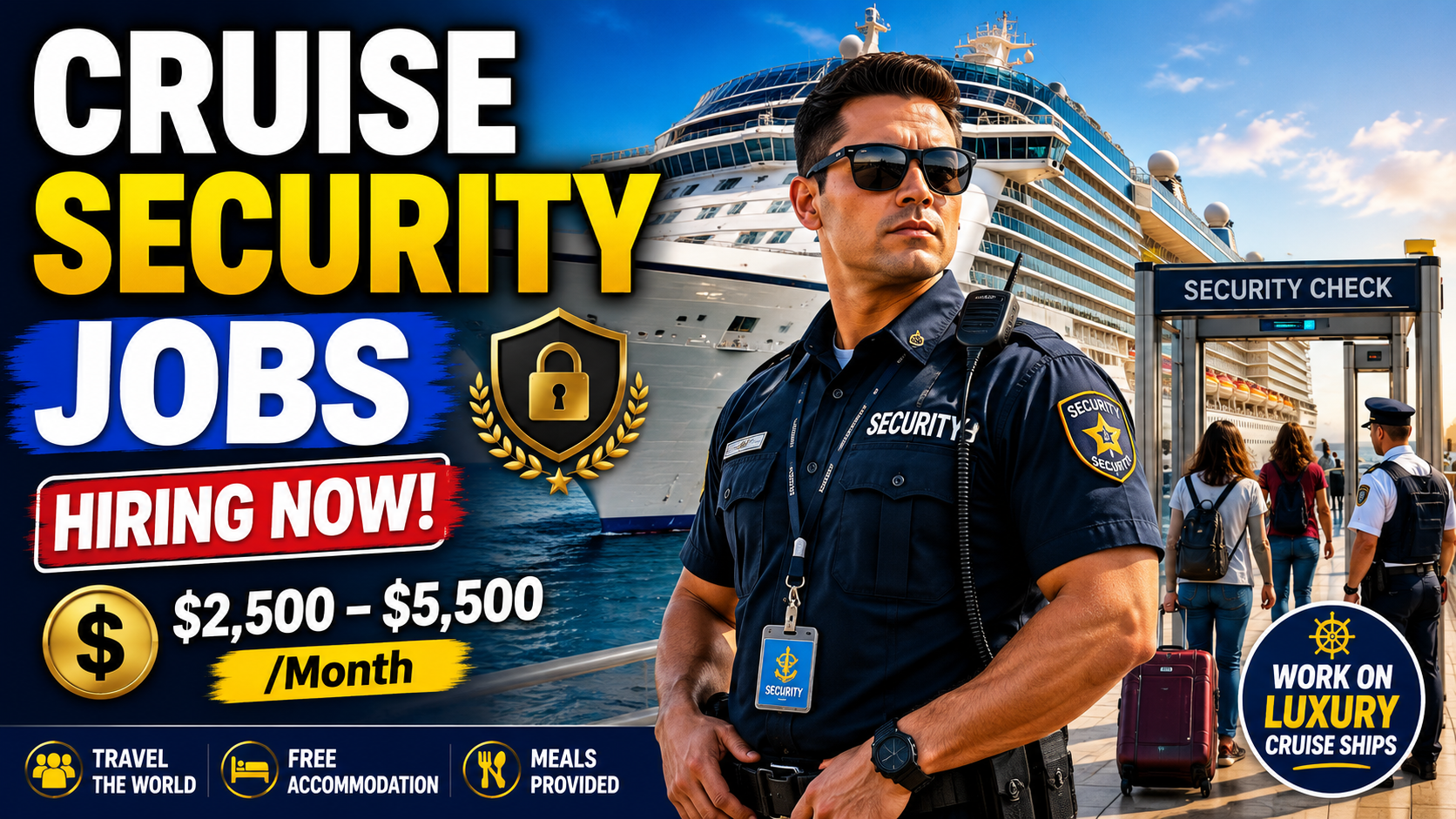
Cruise security jobs offer an exciting opportunity to work while traveling the world. Security officers on cruise ships are responsible for protecting passengers, crew members, and the vessel itself. These professionals ensure safety, prevent crime, monitor security systems, and respond to emergencies.
If you’re looking for an international career with competitive pay, free accommodation, and the chance to visit different countries, cruise ship security could be an excellent option.
What Does a Cruise Ship Security Officer Do?
The primary responsibility of a cruise security officer is to maintain a safe environment for everyone onboard. Daily duties typically include:
- Conducting passenger and crew security screenings
- Monitoring CCTV cameras and alarm systems
- Patrolling public and restricted areas
- Responding to emergencies and security incidents
- Enforcing ship safety policies
- Investigating thefts or suspicious activities
- Assisting during emergency drills and evacuations
- Preparing security reports and incident documentation
Security personnel work closely with the ship’s officers and emergency response teams.
Cruise Security Job Requirements
Most cruise lines require candidates to meet the following qualifications:
- Minimum age of 21 years
- High school diploma or equivalent
- Previous experience in security, police, military, or law enforcement
- Good physical fitness
- Strong communication skills in English
- Clean criminal background
- Valid passport
- Ability to work long contracts and flexible shifts
Some companies also prefer candidates with maritime security experience.
Preferred Certifications
Having additional certifications can improve your chances of getting hired:
- STCW Basic Safety Training
- Crowd Management Certificate
- Security Awareness Training
- Designated Security Duties Certificate
- First Aid and CPR Certification
- Fire Fighting Training
These certifications are often mandatory for shipboard employment.
Skills Needed
Successful cruise security officers should possess:
- Excellent observation skills
- Physical fitness
- Problem-solving ability
- Conflict resolution skills
- Teamwork
- Emergency response knowledge
- Professional attitude
- Strong customer service skills
Cruise Security Officer Salary
Salary depends on the cruise line, position, and experience.
Typical monthly earnings include:
| Position | Monthly Salary |
|---|---|
| Security Guard | $1,800–$2,800 |
| Security Officer | $2,500–$4,000 |
| Security Supervisor | $3,500–$5,500 |
| Chief Security Officer | $5,500–$8,000+ |
Most cruise lines also provide:
- Free accommodation
- Free meals
- Medical care onboard
- Uniforms
- Travel to and from the ship
- Tax advantages (depending on your country)
Working Hours
Security officers generally work:
- 10–12 hours per day
- 7 days a week during contracts
- Contracts lasting 4–8 months
After completing a contract, employees usually receive vacation leave before their next assignment.
Top Cruise Lines Hiring Security Staff
Major cruise companies regularly recruit security professionals, including:
- Royal Caribbean International
- Carnival Cruise Line
- Norwegian Cruise Line
- MSC Cruises
- Princess Cruises
- Celebrity Cruises
- Holland America Line
- Disney Cruise Line
- Virgin Voyages
- Cunard Line
Recruitment schedules vary throughout the year.
How to Apply for Cruise Security Jobs
Follow these steps:
- Prepare a professional CV highlighting security experience.
- Obtain the required maritime certifications.
- Apply through official cruise line career portals or authorized recruitment agencies.
- Attend interviews.
- Complete medical examinations and background verification.
- Receive your employment contract and travel arrangements.
Advantages of Cruise Security Jobs
Working in cruise security offers several benefits:
- Competitive salary
- Free accommodation and meals
- International work experience
- Opportunity to travel worldwide
- Career growth
- Tax-saving opportunities in some countries
- Exposure to multicultural environments
Challenges
Like any profession, cruise security also has challenges:
- Long working hours
- Extended periods away from family
- Limited personal space
- High responsibility during emergencies
- Strict company policies
However, many professionals find the rewards worth the commitment.
Career Growth
A typical career path includes:
- Security Guard
- Security Officer
- Senior Security Officer
- Security Supervisor
- Assistant Chief Security Officer
- Chief Security Officer
With experience and additional certifications, professionals can move into senior management roles.
Tips to Increase Your Hiring Chances
- Gain experience in law enforcement, military, or private security.
- Improve your spoken English.
- Complete STCW training before applying.
- Keep your passport and documents updated.
- Build a professional resume.
- Practice interview skills.
- Stay physically fit.
Frequently Asked Questions
Is previous security experience required?
Yes. Most cruise lines prefer applicants with professional security, military, or police experience.
Can freshers apply?
Some entry-level opportunities exist, but relevant security experience significantly improves your chances.
Do cruise ships provide accommodation?
Yes. Accommodation, meals, uniforms, and medical care are generally provided free of charge.
Is English mandatory?
Yes. English is the primary working language on most international cruise ships.
Are cruise security jobs safe?
Yes. Cruise lines follow strict international maritime security standards and provide regular safety training.
Final Thoughts
Cruise security jobs offer an excellent career for individual